Pages

Showing posts with label Article. Show all posts

Friday, 22 August 2014

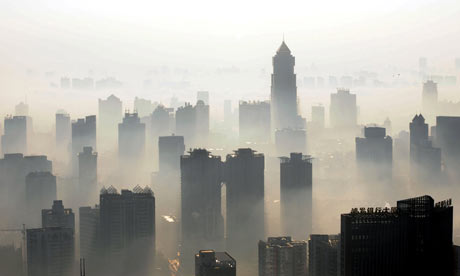
We’ve heard of Global Warming, but what the hell is Global Dimming?


We should all now be aware of the concept of climate change. Not only has it become part of mainstream science but its claim to impending global catastrophe has given the theory a very distinctive role in mainstream politics. We have been taught that the increase in atmospheric CO2 produced by man-made and natural causes has the potential to prevent solar energy from escaping into space, resulting in higher global temperatures known as the greenhouse effect. The theory of global warming is accepted worldwide; encouraging businesses to take corporate responsibility for their carbon emissions and has been a catalyst for international organisations such as the Center for Climate and Energy Solutions. What we pay less attention to is the other climate phenomenon that appears to be opposing the effects of Global warming.

The particles released into the atmosphere from centuries of burning coal, oil and wood have combined with water droplets in clouds; by acting as a base the airborne particulates made up of soot, ash, and sulphur compounds encourage more water droplets to form in clouds.

The clouds formed from the particle and water droplet combination have been slowly reducing the amount of sun that reaches the earth’s surface by reflecting solar rays back into space. This is happening at a rate of roughly 2% every 10 years.

Global dimming was first discovered by Gerry Stanhill, an English climate scientist carrying out research in Israel. Stanhill was comparing Israel’s recordings of sunlight in the 1950s with more recent ones. Stanhill found that there was a decrease in sunlight by 22%. He published his research in 2001 but other climate scientists were sceptical of his results. It was not until years later when a team of Australian scientists confirmed Stanhill’s findings when they reached the same conclusions using a different method.

Experts in climate science have not been able to rule out that natural weather variations have contributed to global dimming, but there are strong correlations between the intensity of cloud cover and trends in atmospheric pollution.

In some locations such as Lerwick, UK no dimming has been recorded whereas continuous dimming has been observed in Hong Kong. Industrial activity in the UK diminished a number of decades ago and the vast majority of Industry relocated to countries like China and India. 

Although the two climate processes have so far been apposing each other. Global dimming is a danger to us. Anup Shah who writes for Global Issues wrote “The pollutants that lead to global dimming also lead to various human and environmental problems, such as smog, respiratory problems, and acid rain.” The reflective clouds produced by global dimming shield the oceans from the sun’s radiation, making waters in the northern hemisphere much cooler. Cooler oceans mean less water evaporation and, in a cruel twist of irony, the poor water evaporation generates a reduced amount of water vapour. Global dimming may be disrupting global weather patterns and is likely responsible for the 1970s and 80s African droughts which claimed hundreds of thousands of lives. 

"My main concern is global dimming is also having a detrimental impact on the Asian monsoon . . . We are talking about billions of people." Prof Veerhabhadran Ramanathan, one of the world's leading climate scientists.

The dimming effect of increased cloud cover is likely to be cancelling out a proportion of the greenhouse effect introduced by growing global CO2 emissions.  However as the international community has encouraged the reduction of pollutants, the shielding effect of global dimming will also be reduced and the planet may begin to observe the greatly amplified effects of global warming. Many countries in Europe have taken steps to reduce their pollutant producing emissions, but reducing air pollution may have tipped the scale in Global warming’s favour and resulted in the 2003 European heatwave. The surge in temperatures created forest fires in Portugal and killed thousands in France.

In short, the burning of fossil fuels and a geographical shift and intensification of industrial activity has contributed to two unstable environmental phenomenon; global warming and global dimming. The two have mostly cancelled each other out, but if climate science and international policy are to combat one they must combat both or we risk further upsetting the balance and causing irreversible damage to the planet and our way of life.

References
Clark, D (2012) What is Global Dimming?, The Guardian, accessed 15/08/2014 [Online] available from: http://www.theguardian.com/environment/2012/may/11/global-dimming-pollution
Conserve Energy Future (2014) What is Global Dimming?, accessed 15/08/2014 [Online] available from: http://www.conserve-energy-future.com/causes-and-effects-of-global-dimming.php
Haywood, J (2013) Global Dimming, Met Office, accessed 15/08/2014 [Online] available from: http://www.metoffice.gov.uk/climate-change/guide/science/explained/dimming
Horizon (2005) Global Dimming, BBC, accessed 15/08/2014 [Online] available from: http://www.bbc.co.uk/sn/tvradio/programmes/horizon/dimming_prog_summary.shtml

Shah, A (2005) Global Dimming, Global Issues, accessed 15/08/2014 [Online] available from: http://www.globalissues.org/article/529/global-dimming

Friday, 15 August 2014

A Guide to Legitimate Descent


Protests are used as a means to voice an opinion that may otherwise go unheard. Demonstrating in the street is not the only way to achieve this goal. Some people prefer to use music and the arts to get their point across. Others, such as myself, use the written word but it really doesn’t matter what median you choose as long as it is effective and authentic. Our world needs people to express their opinions, it is an essential part of any human society because it is a means for change, and like good Heraclitus said “The only thing that is constant is change.”

We now have unprecedented access to the internet where we can sign e-petitions, join all manners of message boards, and participate in group discussions on social media websites. But nothing makes a statement like 100,000 people parading through the heart of a city holding pickets covered in colourful slogans, while chanting, and pissing off the regular commuters. You may be reading this thinking back to a time when those damned protesters disrupted your travel plans, but that’s kind of the point. You are supposed to take notice. How else are you going to find out that this many people oppose David Cameroon’s latest ridiculous policy? From a biased news organisation that has its own agenda (Future proprietors, don’t let this affect my employment chances)? If it does nothing else it makes you wonder, if these people feel so strongly about it that they are willing to call in sick to participate, than maybe not everything is as it seems.

In most countries there is no law banning the peaceful assembly of a group, there may be instances where activist groups are asked to inform the authorities if they are planning a demonstration, but I always figured that these are situations of "We are informing you as required, but this is going ahead whether you like it or not." unless there is a potential for a major public disturbance than the right-to-protest point of view should very well be exercised.  

What about when a protest group is confronted by an opposition group? Surely both sides have the right to voice their opinions, but this meeting of the minds contains within it the potential for violence. In these instances it might be reasonable to disperse an opposing group. This would not be a breach of their right to assemble but a precaution to avoid a very dangerous situation. There have been occasions where attempts to separate groups with opposing ideals have been unsuccessful; The English Defence League often come up against United Against Fascism but of course both groups have a right to voice their opinions; the Euro maiden demonstrations in Ukraine that managed to oust former President Viktor Yanukovych later met resistance against pro-Russian groups and has now escalated into a bloody civil war.

On many occasions in the last decade, we have seen a number of struggles reach a point where violence increases on both sides and the stakes are dramatically raised. The intensification turns one side into rebels, freedom fighters, or terrorists depending on their political alignment, and bears characteristics common with rapid destabilization of social services, infrastructure and a peaceful way of life. The Arab Spring was triggered by Tunisian fruit vendor Mohamed Bouazizi, who set himself on fire after harassment by government officials. The region wide conflict that followed has shown us what can result from a socio-political movement given the right atmosphere.

After witnessing the events of the past few years it is quite clear that demonstrations can go very wrong (or very right depending on your perspective), however the examples discussed cannot be used as justification to take away a person’s right to seek alternatives. The examples definitely do not justify law enforcement treating demonstrators as criminals. During the Toronto G20 in 2010 over 1000 people were arrested for various disturbance charges. 1000 arrests make it seem like the protesters were breaking all kinds of laws but it turned out that only a few dozen were actually convicted. This sounds more like Marshall Law rather than police upholding order.  Do the Police have the ability to enact Marshall Law in times of mass protest? Some authorities seem to have the ability to call an act into effect when they feel it is necessary. So the evidence would point to a possible yes.

An example of this would be during the 2011 demonstrations in Montreal, when on many occasions the police chose to call the assemblies unlawful and went on to threaten that if the crowd did not disperse participants would be arrested. What the police failed to realise was that these people weren't going anywhere, and they knew the Police did not have legitimate grounds for arrest, so instead the authorities adopted tactics of violence and intimidation. The protesters acted in kind.  
    
Before you misunderstand me, this is no anti-law enforcement rant. In a lot of cases, police have no choice but to use violence on protesters. Now that isn't because they must match violence with violence, but it’s due to the orders that have been passed down through the chain of command. Intentional intimidation is the state’s response to large groups of people who are preaching an alternative way of life. The suppression of change is a way of maintaining order, and it is done by downplaying a demonstration as a rabble of angry hooligans with nothing better to do.  

Don’t ever be afraid to pursue alternatives and ask hard questions. Change has to start somewhere.


References:

STEVE LEVINE (2013) 10 Reasons Why Everyone Is Protesting, Accesses 17/07/14 [Online] Available from: http://www.theatlantic.com/international/archive/2013/07/10-reasons-why-everyone-is-protesting/277470/

Patparazzi aka Eye of the City (2012) "Droit de Cité" - Where is our right to protest going? Youtube, Accesses 09/07/14 [Online] Available from: https://www.youtube.com/watch?v=92VH01UqZA4

Press For Truth (2011) Into the Fire, Youtube, Accesses 12/07/14 [Online] Available from: https://www.youtube.com/watch?v=zejD0UkMGGY

Friday, 8 August 2014

Islamophobia and Domestic Terrorism in China

Tiananmen Square 28th October 2013
Beginning with the Tiananmen Square incident on 28th October 2013, the Xinjiang Province in China has been witness to a number of recent attacks where many lives have ended and many questions have been raised ‘Who is carrying out these attacks?’ and ‘Why are the attacks happening in the first place?’ To understand these events and the motives behind them it is important to recognise the location in which they are taking place.

Xinjiang is in the North West of China and is the largest of all the Chinese provinces. Xinjiang borders Russia, Mongolia, Kazakhstan, Kyrgyzstan, Tajikistan, Afghanistan, Pakistan and India. The province is home to many number of ethnic groups the largest being the Uyghur people followed by the Han Chinese. These two ethnic groups have not always seen eye to eye, mainly due to the majority of the Uyghur population seeking autonomy from the rest of China and the Han supporting the Chinese state in their attempt to modernise the region. The Xinjiang province is of particular importance to China as it shares boarders with eight different countries, giving the province a particular geopolitical significance. In some parts Xinjiang’s boarders have been militarised, namely the Afghanistan and Pakistan boarders. As western forces begin to withdraw from Afghanistan and the surrounding area, Xinjiang’s boarders have been secured as a precaution. It is believed that if radical separatist joined with terrorist insurgents from Pakistan and Afghanistan then China could be facing a cross-border conflict that it would much rather avoid.

The response from Chinese leadership has not only been increased boarder control but also a strict crackdown on perceived separatism and other activities that they believe might inspire such ideology. The crackdown has introduced religious restrictions for those practicing Islam, which happens to be the religion of the Uyghur people, who make up almost half the population in China’s largest province, and have been seeking greater autonomy for many years. So to stop the spread of terrorism, the leadership has decided to alienate a population, restrict their rights, and give them a reason to resent authority. 

I think the phrase ‘playing with fire’ would probably be an understatement in this context.

Vice News correspondent Jordan Larson reminded us in his article “Strike Out! Police in China Are Rounding Up and Destroying Matches” restrictions on the Uyghur are nothing new. “Informants are paid to point out women wearing the hijab and men sporting long beards, Islamic education for children is banned, and children are prohibited from entering mosques during Ramadan. The government also recently banned civil servants and students in the region from fasting for Ramadan.”

To add to the controversy on 25th June 2009 around 100 Uyghur were killed over accusations that 2 Han women had been raped by six Uyghur men; there was no evidence to support this claim. Ten days later on the 5th July 2009 Uyghur protesters were ‘massacred’ by Chinese authorities, the authorities claimed that 46 Uyghur were killed, however, eye-witnesses claimed the death toll was closer to 1000.

On top of all this, demolition in the old city of Kashgar has been approved by local (Chinese) authorities. Around 50,000 Uighurs will be displaced and moved to new apartment blocks. This is in the name of earthquake protection, which would be an understandable reason to advise people to leave their homes but it appears as though the national leadership has an ulterior motive; one that seeks greater control over cultural practices by replacing the Uighur’s traditional way of life with the consumer culture of modern China.              
Xei Tao - a political science professor at Beijing Foreign Studies University - believes that the Chinese government must rethink its approach to domestic terrorism "The US did the same thing, and something probably even more stupid . . . look at Guantanamo bay, look at US invasion in Afghanistan and Iraq."  
China likes to keep its national and international policy regarding many things particularly close to its chest, and there aren't many ways to know what they will do in the future to suppress any potency behind domestic extremism. In a recent article by Tom Philips at the Telegraph, Chinese officials declared a “people’s war” on terrorism and have begun a PR campaign to possibly avoid criticism from foreign observers. They intend to increase security measures in an attempt to regain the confidence of the Han population, but heightening suspicion is likely to further alienate the Uyghur population.

In their attempts to secure China from the influence of external terrorism they have bullied, intimidated, and marginalised an ethnic group that makes up almost half the population of their largest province. The discrimination and cultural control have resulted in provoking the Uyghur population and possibly radicalising a small percentage of them.  The Chinese leadership must come to understand that their current approach to domestic terrorism is likely to escalate into a long drawn out struggle that will result in more suffering and possibly increased support for the separatist movement in Xinjiang.   

References
Al Jazeera (2014) Chinese Uighurs: separatism vs terrorism, YouTube, Accessed 21/07/2014 [Online] Available from:  https://www.youtube.com/watch?v=H7T3r-sPH-M&index=39&list=WL
Corbett Report (2014) China’s War on Terror, YouTube, Accessed 21/07/2014 [Online] Available from: https://www.youtube.com/watch?v=53gcgadX1gU&index=41&list=WL
Jordan Larson (2014) Strike Out! Police in China Are Rounding Up and Destroying Matches, Vice News, Accessed 17/07/2014 [Online] Available from: https://news.vice.com/article/strike-out-police-in-china-are-rounding-up-and-destroying-matches
Journeyman Pictures (2009) Uighur Dilemma, YouTube, Accessed 21/07/2014 [Online] Available from: https://www.youtube.com/watch?v=Gm4uVWNAc0k&index=43&list=WL
Phillip Potter (2014) Terrorism in China: the global dimension, The Guardian, Accessed 20/07/2014 [Online] Available from: http://www.theguardian.com/commentisfree/2014/may/06/terrorism-china-uighur-militants-afghanistan-pakistan
Tom Phillips (2014) Beijing assembles people's army to crush China terrorists with an iron fist, The Telegraph, Accessed 20/07/2014 [Online] Available from: http://www.telegraph.co.uk/news/worldnews/asia/china/10978406/Beijing-assembles-peoples-army-to-crush-China-terrorists-with-an-iron-fist.html

World Uyghur Congress (2014) The Urumqi Massacre, Accessed 20/07/2014 [Online] Available from:  http://www.uyghurcongress.org/en/?cat=255

Why Should People Care?

A good friend of mine often likes to play the devil’s advocate in discussions about current events and international affairs. He once asked the question, why are these matters important in our daily lives? Of course, this could be asked about many things that people discuss and take interests in, but he has a point; why should the average person care about matters that are likely out of their control?

A question of this magnitude might generate responses in the context of; information empowering the masses, and ignorance being the lazy man’s form of consent. I believe that our obsession with gathering information about our surrounding all a part of human development. We use information about our world to expand our intelligence and without this stimulation we stagnate.  

We have entered a juncture in human existence where our collective intelligence will determine the future of this planet, it is both our right and privilege to inform ourselves of what we could accomplish.

“In the age of information, ignorance is a choice.”

- Donny Miller