Pages

Showing posts with label Environment. Show all posts

Friday, 5 December 2014

What's in the Headlines?


The Niger Delta suffers another oil spill

The Niger delta has experienced another oil spill from one of Shells pipelines. Local environmental activists have said that it ranks as one of the worst in Nigeria for years.

The late November spill happened in Okolo Launch on Bonny Island. According to an investigation by shell and government officials 3,800 barrels have spilled recently, but 1,200 barrels had been recovered as of Tuesday.

In spite of efforts to manage the spill, vast quantities of oil have reached the shore and have started to have an adverse effect on the fragile ecosystem. "We saw dead fish, dead crabs ... This spill occurred 7-8 nautical miles from the shore ... so the volume runs into thousands of barrels," Alagoa Morris, head of the Niger Delta Resource Center for Environmental Rights Action

20 million people and 40 different ethnic groups inhabit areas of the delta, it is the largest wetland in Africa and contains one of the highest concentrations of biodiversity on the planet. The unique ecosystem also has more species of freshwater fish than any ecosystem in West Africa.

Shell has placed the blame for the spill on failed crude theft, and claims that over the last five years 70 percent of all oil spills have been the result of sabotage.

However, Shell has recently been held accountable for the environmental damage caused by a 2011 oil leak in the offshore Bonga oil field, this incident saw nearly 40 thousand barrels of oil drained into the sea. The Nigerian parliament determined that Shell must pay nearly 4 billion dollars (3.2 billion euros).


In a recent investigation Amnesty International revealed that Shell has repeatedly made false claims about the size and impact of two major oil spills at Bodo in Nigeria that happened back in 2008. The aim of the company was to minimize its compensation payments for the damage caused to 15,000 people whose livelihoods were devastated by oil pollution. In a high-profile compensation case in England’s High Court, Shell did confirm that the two spills had been far greater than the previously believed. Yet Shell did not give a revised figure, which now stands at 4,144 barrels.

Monday, 8 September 2014

What's in the Headlines?


Monsoon floods hit India and Pakistan

A state of emergency has been declared in Pakistan as the annual monsoon season hits much harder than expected. The torrential monsoon rains have caused flash floods and landslides killing at least 120 people in India and 160 in Pakistan. The disaster has been reported as the worst weather crisis the region has witnessed in six decades.

In Pakistan at least 4,000 homes have been destroyed. Rescue workers and the army are using helicopters and boats to evacuate locals and have set up close to 50 camps to provide temporary shelter.


In India the heavy rains set off landslides, and Dozens of bridges have been damaged or washed away. At least 300 federal rescue workers have joined thousands of state police and soldiers to rescue tens of thousands of people stranded across the region. 

Monday, 25 August 2014

What's in the Headlines?


Underground volcanic eruption in Iceland

There has been a small volcanic eruption under Europe’s largest glacier in Iceland. No eruption has yet breached the surface of the glacier but on Saturday authorities raised the warning code for aviation to red, the highest level, and closed the airspace above the Bardarbunga volcano after the eruptions began. On Sunday Iceland lowered its aviation alert level from red to orange, implying that there is still the possibility of an above ground eruption but the threat was not imminent.

Thousands of earthquakes have been recorded under the glacier over the past week. An Icelandic police statement said "Because of pressure from the glacier cap, it is uncertain whether the eruption will stay sub-glacial or not." Authorities have previously warned that any eruption could result in flooding north of the glacier. Several hundred people have been evacuated from the surrounding area.


The 2010 eruption of the Eyjafjallajokull volcano produced an ash cloud that caused more than 100,000 flights to be cancelled across the UK and the rest of the world. 

Friday, 22 August 2014

We’ve heard of Global Warming, but what the hell is Global Dimming?


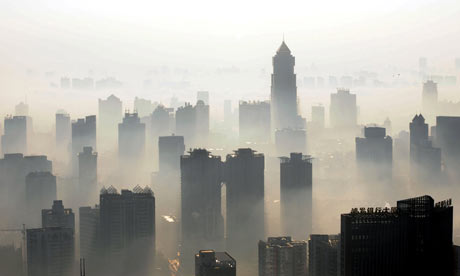
We should all now be aware of the concept of climate change. Not only has it become part of mainstream science but its claim to impending global catastrophe has given the theory a very distinctive role in mainstream politics. We have been taught that the increase in atmospheric CO2 produced by man-made and natural causes has the potential to prevent solar energy from escaping into space, resulting in higher global temperatures known as the greenhouse effect. The theory of global warming is accepted worldwide; encouraging businesses to take corporate responsibility for their carbon emissions and has been a catalyst for international organisations such as the Center for Climate and Energy Solutions. What we pay less attention to is the other climate phenomenon that appears to be opposing the effects of Global warming.

The particles released into the atmosphere from centuries of burning coal, oil and wood have combined with water droplets in clouds; by acting as a base the airborne particulates made up of soot, ash, and sulphur compounds encourage more water droplets to form in clouds.

The clouds formed from the particle and water droplet combination have been slowly reducing the amount of sun that reaches the earth’s surface by reflecting solar rays back into space. This is happening at a rate of roughly 2% every 10 years.

Global dimming was first discovered by Gerry Stanhill, an English climate scientist carrying out research in Israel. Stanhill was comparing Israel’s recordings of sunlight in the 1950s with more recent ones. Stanhill found that there was a decrease in sunlight by 22%. He published his research in 2001 but other climate scientists were sceptical of his results. It was not until years later when a team of Australian scientists confirmed Stanhill’s findings when they reached the same conclusions using a different method.

Experts in climate science have not been able to rule out that natural weather variations have contributed to global dimming, but there are strong correlations between the intensity of cloud cover and trends in atmospheric pollution.

In some locations such as Lerwick, UK no dimming has been recorded whereas continuous dimming has been observed in Hong Kong. Industrial activity in the UK diminished a number of decades ago and the vast majority of Industry relocated to countries like China and India. 

Although the two climate processes have so far been apposing each other. Global dimming is a danger to us. Anup Shah who writes for Global Issues wrote “The pollutants that lead to global dimming also lead to various human and environmental problems, such as smog, respiratory problems, and acid rain.” The reflective clouds produced by global dimming shield the oceans from the sun’s radiation, making waters in the northern hemisphere much cooler. Cooler oceans mean less water evaporation and, in a cruel twist of irony, the poor water evaporation generates a reduced amount of water vapour. Global dimming may be disrupting global weather patterns and is likely responsible for the 1970s and 80s African droughts which claimed hundreds of thousands of lives. 

"My main concern is global dimming is also having a detrimental impact on the Asian monsoon . . . We are talking about billions of people." Prof Veerhabhadran Ramanathan, one of the world's leading climate scientists.

The dimming effect of increased cloud cover is likely to be cancelling out a proportion of the greenhouse effect introduced by growing global CO2 emissions.  However as the international community has encouraged the reduction of pollutants, the shielding effect of global dimming will also be reduced and the planet may begin to observe the greatly amplified effects of global warming. Many countries in Europe have taken steps to reduce their pollutant producing emissions, but reducing air pollution may have tipped the scale in Global warming’s favour and resulted in the 2003 European heatwave. The surge in temperatures created forest fires in Portugal and killed thousands in France.

In short, the burning of fossil fuels and a geographical shift and intensification of industrial activity has contributed to two unstable environmental phenomenon; global warming and global dimming. The two have mostly cancelled each other out, but if climate science and international policy are to combat one they must combat both or we risk further upsetting the balance and causing irreversible damage to the planet and our way of life.

References
Clark, D (2012) What is Global Dimming?, The Guardian, accessed 15/08/2014 [Online] available from: http://www.theguardian.com/environment/2012/may/11/global-dimming-pollution
Conserve Energy Future (2014) What is Global Dimming?, accessed 15/08/2014 [Online] available from: http://www.conserve-energy-future.com/causes-and-effects-of-global-dimming.php
Haywood, J (2013) Global Dimming, Met Office, accessed 15/08/2014 [Online] available from: http://www.metoffice.gov.uk/climate-change/guide/science/explained/dimming
Horizon (2005) Global Dimming, BBC, accessed 15/08/2014 [Online] available from: http://www.bbc.co.uk/sn/tvradio/programmes/horizon/dimming_prog_summary.shtml

Shah, A (2005) Global Dimming, Global Issues, accessed 15/08/2014 [Online] available from: http://www.globalissues.org/article/529/global-dimming