Pages

Monday, 25 August 2014

What's in the Headlines?


Unidentified air strikes kill 15 fighters in Libya

15 fighters have been killed and 30 others have been wounded by air strikes carried out by unidentified fighter jets. The air strikes targeted several militia positions in Tripoli, including the Interior ministry. The Libyan government has directed the military to investigate the source of the unknown air strikes. The air strikes came hours after forces from the city of Misrata said they had seized the main airport.

Most of Libya's neighbours met in Cairo today to discuss responses to the latest Libyan crisis. Fighting has greatly intensified in recent weeks as General Khalifa Haftar has declared war on Islamist militant forces in the war torn country. The General’s forces have been carrying out attacks on a group called Operation Dawn, which is the group who claimed to have captured the airport in Misrata.


The recent fighting has been reported as the worst seen since the overthrow of Muammar Gaddafi in 2011.

What's in the Headlines?


Underground volcanic eruption in Iceland

There has been a small volcanic eruption under Europe’s largest glacier in Iceland. No eruption has yet breached the surface of the glacier but on Saturday authorities raised the warning code for aviation to red, the highest level, and closed the airspace above the Bardarbunga volcano after the eruptions began. On Sunday Iceland lowered its aviation alert level from red to orange, implying that there is still the possibility of an above ground eruption but the threat was not imminent.

Thousands of earthquakes have been recorded under the glacier over the past week. An Icelandic police statement said "Because of pressure from the glacier cap, it is uncertain whether the eruption will stay sub-glacial or not." Authorities have previously warned that any eruption could result in flooding north of the glacier. Several hundred people have been evacuated from the surrounding area.


The 2010 eruption of the Eyjafjallajokull volcano produced an ash cloud that caused more than 100,000 flights to be cancelled across the UK and the rest of the world. 

What's in the Headlines?


The Islamic State has set it's sights on expansion 

The Islamic state has pushed to secure the border between Turkey and Syria to act as a gateway for its recruits to enter the Caliphate. The Turkish government is being pressured by British politicians to put a stop to crossing of new Islamic State recruits. Islamic state fighters have begun to move up from Syria towards the Turkish border. They advance in columns of armoured trucks that were looted from abandoned Iraqi military bases. 

Dr Hisham al-Hashimi, an Iraqi expert on Isis said "If [the Turkish border] is closed, it will cut three things: funding, an entrance for the foreign fighters and links to Europe which they are trying to open. If those plans are destroyed, they will aim for another gate to Lebanon." Islamic State fighters withdrew from areas north of Homs and have travelled east after a battle between themselves and Nusra Front, Syria’s branch of al Qaeda. The Islamic state has found opposition with western backed fighters in Syria and Iraq and also other Islamic militants like Nusra Front.


The paramilitary wing of the Kurdistan Worker's Party (PKK) - which was once declared a terrorist organisation by the U.S. - is now fighting alongside soldiers from Iraqi Kurdistan known as the Peshmega. The two forces along with U.S. air support have been successful in slowing the advance of Islamic State forces in some areas in Iraq. 

Friday, 22 August 2014

We’ve heard of Global Warming, but what the hell is Global Dimming?


We should all now be aware of the concept of climate change. Not only has it become part of mainstream science but its claim to impending global catastrophe has given the theory a very distinctive role in mainstream politics. We have been taught that the increase in atmospheric CO2 produced by man-made and natural causes has the potential to prevent solar energy from escaping into space, resulting in higher global temperatures known as the greenhouse effect. The theory of global warming is accepted worldwide; encouraging businesses to take corporate responsibility for their carbon emissions and has been a catalyst for international organisations such as the Center for Climate and Energy Solutions. What we pay less attention to is the other climate phenomenon that appears to be opposing the effects of Global warming.

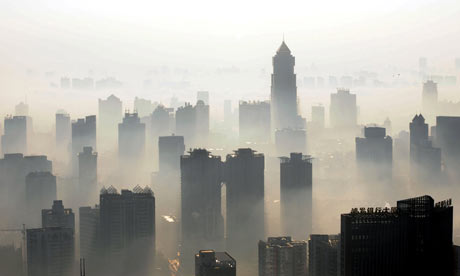
The particles released into the atmosphere from centuries of burning coal, oil and wood have combined with water droplets in clouds; by acting as a base the airborne particulates made up of soot, ash, and sulphur compounds encourage more water droplets to form in clouds.

The clouds formed from the particle and water droplet combination have been slowly reducing the amount of sun that reaches the earth’s surface by reflecting solar rays back into space. This is happening at a rate of roughly 2% every 10 years.

Global dimming was first discovered by Gerry Stanhill, an English climate scientist carrying out research in Israel. Stanhill was comparing Israel’s recordings of sunlight in the 1950s with more recent ones. Stanhill found that there was a decrease in sunlight by 22%. He published his research in 2001 but other climate scientists were sceptical of his results. It was not until years later when a team of Australian scientists confirmed Stanhill’s findings when they reached the same conclusions using a different method.

Experts in climate science have not been able to rule out that natural weather variations have contributed to global dimming, but there are strong correlations between the intensity of cloud cover and trends in atmospheric pollution.

In some locations such as Lerwick, UK no dimming has been recorded whereas continuous dimming has been observed in Hong Kong. Industrial activity in the UK diminished a number of decades ago and the vast majority of Industry relocated to countries like China and India. 

Although the two climate processes have so far been apposing each other. Global dimming is a danger to us. Anup Shah who writes for Global Issues wrote “The pollutants that lead to global dimming also lead to various human and environmental problems, such as smog, respiratory problems, and acid rain.” The reflective clouds produced by global dimming shield the oceans from the sun’s radiation, making waters in the northern hemisphere much cooler. Cooler oceans mean less water evaporation and, in a cruel twist of irony, the poor water evaporation generates a reduced amount of water vapour. Global dimming may be disrupting global weather patterns and is likely responsible for the 1970s and 80s African droughts which claimed hundreds of thousands of lives. 

"My main concern is global dimming is also having a detrimental impact on the Asian monsoon . . . We are talking about billions of people." Prof Veerhabhadran Ramanathan, one of the world's leading climate scientists.

The dimming effect of increased cloud cover is likely to be cancelling out a proportion of the greenhouse effect introduced by growing global CO2 emissions.  However as the international community has encouraged the reduction of pollutants, the shielding effect of global dimming will also be reduced and the planet may begin to observe the greatly amplified effects of global warming. Many countries in Europe have taken steps to reduce their pollutant producing emissions, but reducing air pollution may have tipped the scale in Global warming’s favour and resulted in the 2003 European heatwave. The surge in temperatures created forest fires in Portugal and killed thousands in France.

In short, the burning of fossil fuels and a geographical shift and intensification of industrial activity has contributed to two unstable environmental phenomenon; global warming and global dimming. The two have mostly cancelled each other out, but if climate science and international policy are to combat one they must combat both or we risk further upsetting the balance and causing irreversible damage to the planet and our way of life.

References
Clark, D (2012) What is Global Dimming?, The Guardian, accessed 15/08/2014 [Online] available from: http://www.theguardian.com/environment/2012/may/11/global-dimming-pollution
Conserve Energy Future (2014) What is Global Dimming?, accessed 15/08/2014 [Online] available from: http://www.conserve-energy-future.com/causes-and-effects-of-global-dimming.php
Haywood, J (2013) Global Dimming, Met Office, accessed 15/08/2014 [Online] available from: http://www.metoffice.gov.uk/climate-change/guide/science/explained/dimming
Horizon (2005) Global Dimming, BBC, accessed 15/08/2014 [Online] available from: http://www.bbc.co.uk/sn/tvradio/programmes/horizon/dimming_prog_summary.shtml

Shah, A (2005) Global Dimming, Global Issues, accessed 15/08/2014 [Online] available from: http://www.globalissues.org/article/529/global-dimming

Monday, 18 August 2014

What's in the Headlines?


Suicide Bomber attacks U.N. base in Mali

Two U.N. peacekeepers were killed and nine others injured in a suicide attack on a patrol base in northern Mali. MINUSMA (the UN Multidimensional Stabilisation Mission in Mali) official said that both the soldiers who died were from neighbouring Burkina Faso. A pick-up truck laden with explosives drove into the UN camp in Ber, 50km (30 miles) east of Timbuktu, on Saturday. Eye witness "There was no checkpoint. The bomber was able to drive the vehicle right into the camp, among the tents, before blowing himself up."
It comes after three other international peacekeepers - two Bangladeshi, one Chadian - were injured when their vehicles drove over mines in two separate incidents at the end of last week.

Troops from former colonial power France intervened in Mali last year in an attempt to drive back Islamists who had taken advantage of an uprising in the north of the West African country.

There have so far been three weeks of talks between the Malian government and Tuareg separatist rebels in July and August, which were mediated by the Algerian government. Talks aimed at drawing up a road map for peace are due to resume in September.

Source:


What's in the Headlines?


Germany has been caught spying on John Kerry

Der Spiegel have said that the German foreign intelligence agency recorded at least one of John Kerry’s phone conversations after “accidentally” picking up the phone call. German officials have condemned the U.S. for past surveillance carried out on the German population. BND (Germany’s Federal Intelligence Service) intercepted Kerry’s Middle East negotiations with the Israelis, the Palestinians, and other Arab states last year.

German security agents have also been accused of tapping a conversation held between Hillary Clinton and former U.N. chief Kofi Annan regarding negotiations in Syria. The conversation was tapped in 2012 when Clinton was Secretary of State and was later destroyed. German media retrieved the information from documents passed to the CIA by one of its informants inside the BND.

Regional broadcasters NDR said on Friday “apparently, phone calls by US politicians and from other friendly nations have been repeatedly recorded and submitted to the respective BND President as instructed”. A discovery of documents showed the German government had ordered the BND to spy on NATO partner states, these countries were not named. However, Der Spiegel revealed on Saturday that the BND had been spying on Turkey since 2009. The German government supposedly reviews its espionage program every four years but did not modify its priorities after the Edward Snowden-NSA scandal

What's in the Headlines?


Jay Nixon has chosen to escalate force in Ferguson, Missouri

Governor Jay Nixon signed an executive order early this morning to send the national guard into Ferguson to "help restore peace and order and to protect the citizens of Ferguson". The escalation in force has come after an autopsy report that Michael Brown was in face shot six times, including twice in the head. The police officer who shot Michael Brown has been named as Darren Wilson, after an alleged scuffle in Wilson’s patrol car.

Captain Ron Johnson said protesters had fired weapons and thrown petrol bombs at police officers before midnight when the Sunday night curfew began. More people have been injured as businesses have been looted and vandalised by some attending the protests, and police have continued to use tear gas and rubber bullets to disperse crowds.  

Nixon declared a state of emergency at a press conference on Saturday. He imposed an overnight curfew that came into effect at Midnight. The move came after reports of a group of looters smashing windows and looting three stores on Friday night. Amnesty international condemned curfews as the tool of dictators and were in Ferguson to monitor the activity of Police and demonstrators.

Footage of Michael Brown stealing a packet of cigars was believed to have sparked the violence on Friday.
Police officers in riot gear and armed with assault rifles fired tear gas at the 200 protesters who defied the curfew on Saturday night. This came after Captain Ron Johnson from Missouri state highway patrol was quoted saying “We won’t enforce it with teargas.” Seven people were arrested for failing to disperse. A man was shot, and is in a critical condition, but police do not know who by. A police car was also shot at. Some protesters were seen destroying kerb stones to throw at police. Captain Ron Johnson later said that teargas was fired only because police received intelligence that people with guns were on the roof of a barbecue restaurant, awaiting officers.

Friday, 15 August 2014

A Guide to Legitimate Descent


Protests are used as a means to voice an opinion that may otherwise go unheard. Demonstrating in the street is not the only way to achieve this goal. Some people prefer to use music and the arts to get their point across. Others, such as myself, use the written word but it really doesn’t matter what median you choose as long as it is effective and authentic. Our world needs people to express their opinions, it is an essential part of any human society because it is a means for change, and like good Heraclitus said “The only thing that is constant is change.”

We now have unprecedented access to the internet where we can sign e-petitions, join all manners of message boards, and participate in group discussions on social media websites. But nothing makes a statement like 100,000 people parading through the heart of a city holding pickets covered in colourful slogans, while chanting, and pissing off the regular commuters. You may be reading this thinking back to a time when those damned protesters disrupted your travel plans, but that’s kind of the point. You are supposed to take notice. How else are you going to find out that this many people oppose David Cameroon’s latest ridiculous policy? From a biased news organisation that has its own agenda (Future proprietors, don’t let this affect my employment chances)? If it does nothing else it makes you wonder, if these people feel so strongly about it that they are willing to call in sick to participate, than maybe not everything is as it seems.

In most countries there is no law banning the peaceful assembly of a group, there may be instances where activist groups are asked to inform the authorities if they are planning a demonstration, but I always figured that these are situations of "We are informing you as required, but this is going ahead whether you like it or not." unless there is a potential for a major public disturbance than the right-to-protest point of view should very well be exercised.  

What about when a protest group is confronted by an opposition group? Surely both sides have the right to voice their opinions, but this meeting of the minds contains within it the potential for violence. In these instances it might be reasonable to disperse an opposing group. This would not be a breach of their right to assemble but a precaution to avoid a very dangerous situation. There have been occasions where attempts to separate groups with opposing ideals have been unsuccessful; The English Defence League often come up against United Against Fascism but of course both groups have a right to voice their opinions; the Euro maiden demonstrations in Ukraine that managed to oust former President Viktor Yanukovych later met resistance against pro-Russian groups and has now escalated into a bloody civil war.

On many occasions in the last decade, we have seen a number of struggles reach a point where violence increases on both sides and the stakes are dramatically raised. The intensification turns one side into rebels, freedom fighters, or terrorists depending on their political alignment, and bears characteristics common with rapid destabilization of social services, infrastructure and a peaceful way of life. The Arab Spring was triggered by Tunisian fruit vendor Mohamed Bouazizi, who set himself on fire after harassment by government officials. The region wide conflict that followed has shown us what can result from a socio-political movement given the right atmosphere.

After witnessing the events of the past few years it is quite clear that demonstrations can go very wrong (or very right depending on your perspective), however the examples discussed cannot be used as justification to take away a person’s right to seek alternatives. The examples definitely do not justify law enforcement treating demonstrators as criminals. During the Toronto G20 in 2010 over 1000 people were arrested for various disturbance charges. 1000 arrests make it seem like the protesters were breaking all kinds of laws but it turned out that only a few dozen were actually convicted. This sounds more like Marshall Law rather than police upholding order.  Do the Police have the ability to enact Marshall Law in times of mass protest? Some authorities seem to have the ability to call an act into effect when they feel it is necessary. So the evidence would point to a possible yes.

An example of this would be during the 2011 demonstrations in Montreal, when on many occasions the police chose to call the assemblies unlawful and went on to threaten that if the crowd did not disperse participants would be arrested. What the police failed to realise was that these people weren't going anywhere, and they knew the Police did not have legitimate grounds for arrest, so instead the authorities adopted tactics of violence and intimidation. The protesters acted in kind.  
    
Before you misunderstand me, this is no anti-law enforcement rant. In a lot of cases, police have no choice but to use violence on protesters. Now that isn't because they must match violence with violence, but it’s due to the orders that have been passed down through the chain of command. Intentional intimidation is the state’s response to large groups of people who are preaching an alternative way of life. The suppression of change is a way of maintaining order, and it is done by downplaying a demonstration as a rabble of angry hooligans with nothing better to do.  

Don’t ever be afraid to pursue alternatives and ask hard questions. Change has to start somewhere.


References:

STEVE LEVINE (2013) 10 Reasons Why Everyone Is Protesting, Accesses 17/07/14 [Online] Available from: http://www.theatlantic.com/international/archive/2013/07/10-reasons-why-everyone-is-protesting/277470/

Patparazzi aka Eye of the City (2012) "Droit de Cité" - Where is our right to protest going? Youtube, Accesses 09/07/14 [Online] Available from: https://www.youtube.com/watch?v=92VH01UqZA4

Press For Truth (2011) Into the Fire, Youtube, Accesses 12/07/14 [Online] Available from: https://www.youtube.com/watch?v=zejD0UkMGGY

What's in the Headlines?


Russian convoy approaches Ukrainian Border

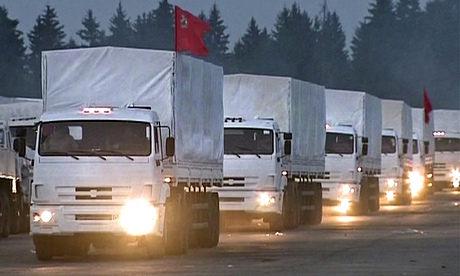
A Russian convoy of 280 military trucks carrying 2,000 tonnes of water, food and other humanitarian aid is making its way towards the Ukrainian Boarder. Kiev reiterated that the convoy could not cross the border until Ukrainian authorities had cleared its cargo.

The humanitarian aid will be delivered to the Luhansk region in eastern Ukraine, which is mostly held by Separatists Forces. Ukraine’s government is sceptical over Russia’s intentions to provide humanitarian aid. Some officials fear that this move could be disguising a Russian plan to invade Eastern Ukraine.


Russian military vehicles supposedly in support of the aid convoy have crossed the Ukrainian border. The aid convoy has remained at the border. A convoy of 23 armoured personnel carriers, supported by fuel trucks and other logistics vehicles crossed the border on Thursday night. Russia has so far denied any military involvement with separatist rebels in Ukraine. 

What's in the Headlines?


Demonstrators clash with Police in Missouri 

Hundreds marched through the streets of Ferguson in Missouri demanding justice for the Police shooting of an unarmed 18 year old male. Police have withheld the name of the office involved with the shooting. Michael Brown was shot and killed by a police officer on Saturday in a Ferguson suburb.

Police officers equipped with riot gear and assault rifles cracked down on the protesters when glass bottles were thrown from the crowd on the fourth night of demonstrations. Police used tear gas and military-style tactics to disperse crowds and arrest a number of people.

Reporters from the Washington Post and the Huffington Post were among those arrested. A camera crew from al-Jazeera America said they were shot by rubber bullets.

Many other demonstrators were shocked at the excessive force used by the police. One protester said “This amount of force was unwarranted. This is an abuse of force. No one is firing guns at them or running at them. This is an overreach.”


Jay Nixon, Governor of Missouri has handed policing responsibility of the protests over to the Highway Patrol. Protesters have responded to the “softer front” of the Highway Patrol and tensions have died down. Although removed from protest duty St. Louis County Police have been tasked with investigating the Death of Michael Brown.